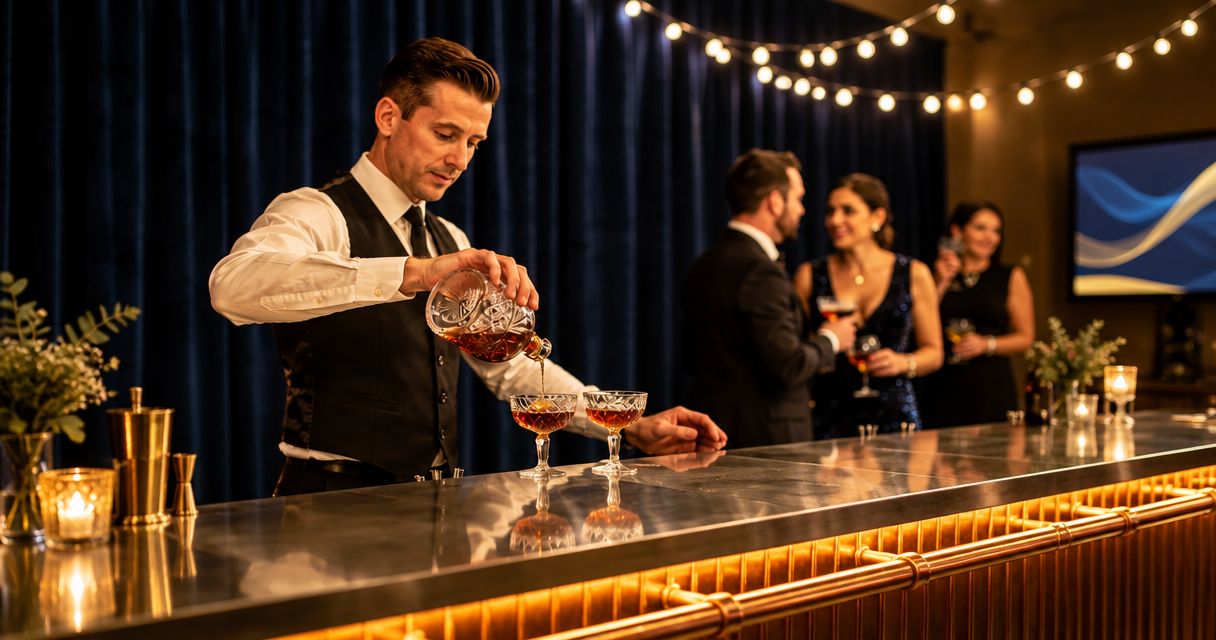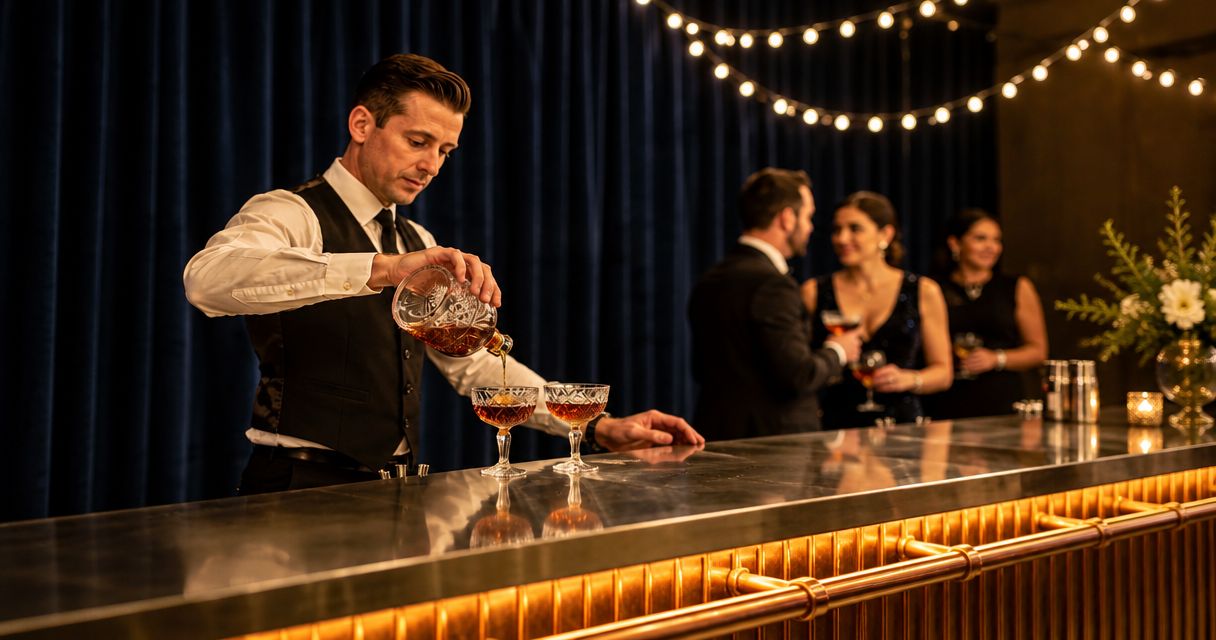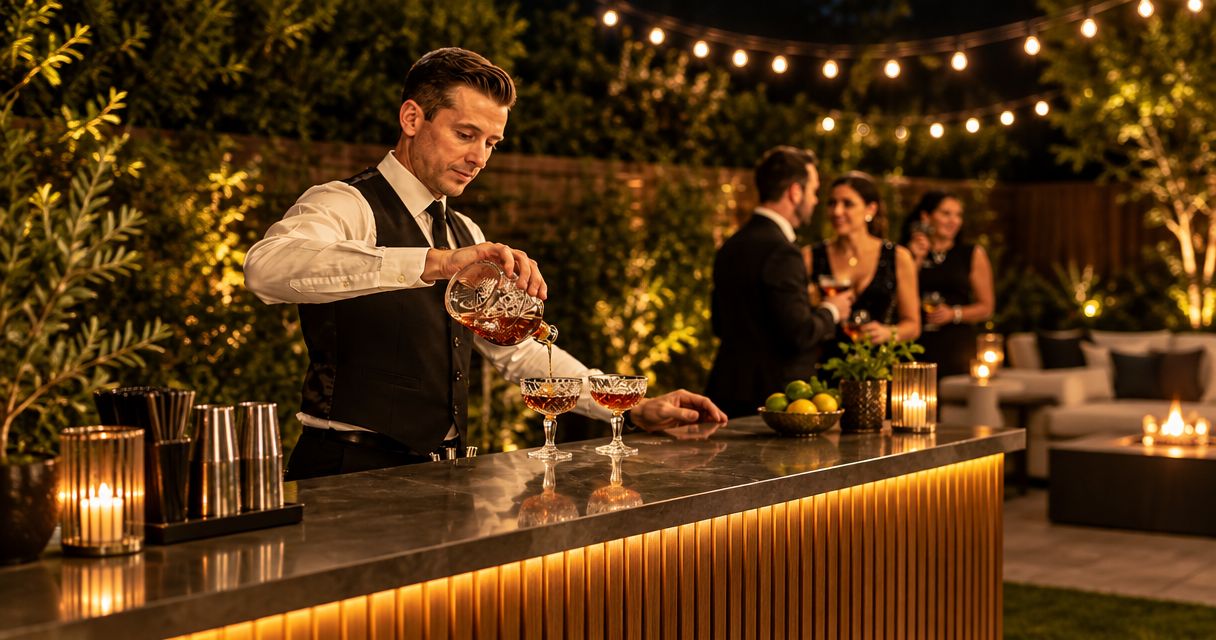
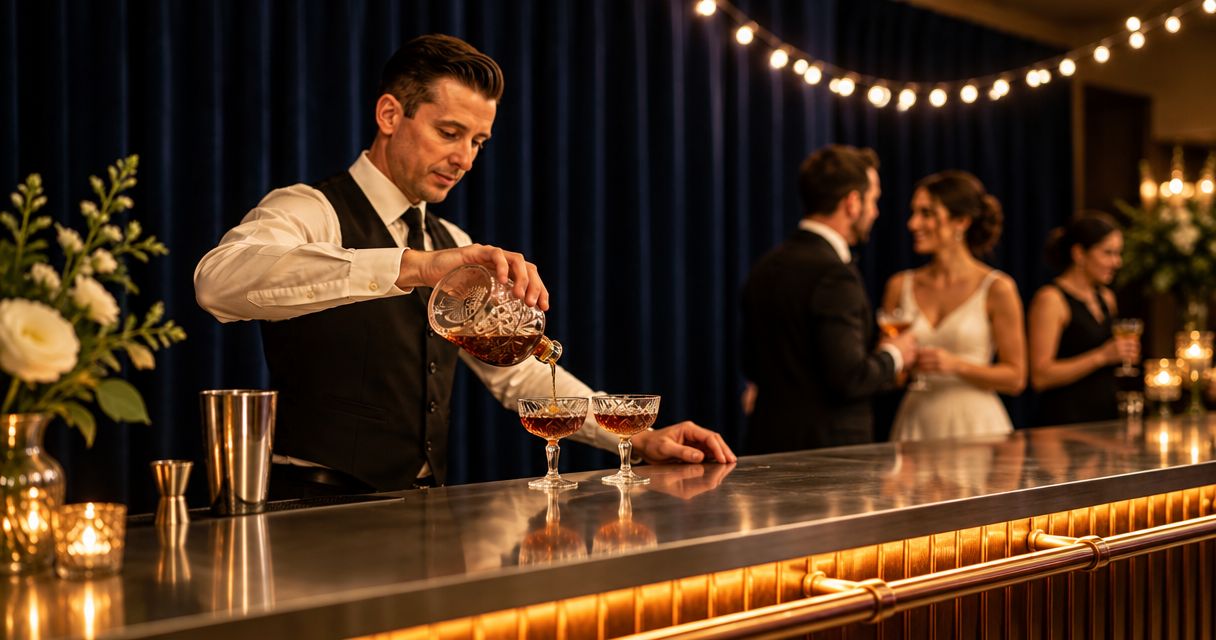
Before booking wedding bartending services, ask your venue whether outside bartenders are allowed, who supplies the alcohol, which documents are required, and when service must end. For your 2026 celebration, get those answers in writing before comparing proposals; a cocktail menu alone does not establish whether a service fits your venue’s rules.
- Book wedding bartending services only after your venue confirms outside-vendor rules, alcohol responsibilities, and service hours.
- Velvetphotobooth provides custom cocktail bartending for Los Angeles weddings and private events.
- Ask separately about staffing, ingredients, glassware, ice, setup, and cleanup; do not assume these are included.
- Treat a full-length mirror photo booth as a separate service with its own placement and access questions.
Wedding bartending services: what should you ask your venue first?
Start with permission, responsibilities, and timing—not the drink list. A clear venue brief gives you a basis for requesting wedding bartending services from Velvetphotobooth or discussing any outside bartender with your coordinator.
Use these questions in order. Each answer gives you something concrete to include in your quote request.
1. Are outside bartenders allowed?
Ask whether the venue requires an in-house bar team, limits you to approved vendors, or accepts an outside provider subject to review. Request the relevant contract language rather than relying on a casual conversation.
If approval is required, ask who makes that decision and what the provider must submit. Keep the approval process separate from your personal preference: liking a bartender does not establish venue permission.
2. Who is responsible for the alcohol?
Ask who purchases, delivers, receives, stores, and removes the alcohol. Clarify whether the venue has restrictions on what can be brought onto the property and where it can be kept.
Then ask the prospective bartender to confirm their own scope. Do not treat bartending, alcohol supply, and bar equipment as interchangeable services. Write down the responsible party for each task so an unanswered question does not become an event-day assignment.
3. What documents does the venue require?
Request the venue’s written requirements for vendor approval, insurance documentation, and any credentials it expects the bar provider to hold. Ask where those documents go and when the venue needs them.
Venue approval and applicable legal requirements are separate checks. Ask the provider to explain what applies to the proposed service arrangement; do not assume that a venue’s acceptance answers every compliance question.
4. Where can the bar operate?
Ask the venue to identify the approved bar location, guest approach, supply storage, and loading route. Confirm whether the proposed position changes between the ceremony, cocktail reception, and dinner.
For an outdoor setup, ask what weather arrangements the venue permits. Request any restrictions on equipment, power use, surfaces, or access before asking a bartender to plan around the space.
5. When can setup, service, and removal happen?
Ask for the earliest vendor arrival, the permitted service window, the final drink-service time, and the deadline for removing equipment. These are separate parts of the schedule.
For a 2026 wedding, put the venue’s confirmed timings into the same planning document as your ceremony and reception schedule. Ask how a delayed dinner or extended speech affects the agreed service end; do not assume the bar can simply stay open longer.
6. Who handles the end of the evening?
Ask who clears glasses, removes waste, packs unused supplies, and returns the bar area to the venue’s required condition. Confirm who receives anything left over and where it should go.
The answer needs a named person or contracted role, not just a general reference to the vendors. Your coordinator, caterer, venue, and bartender should each understand the boundary of their responsibilities.
Why this matters before you request a quote
A quote is easier to assess when every provider receives the same event details. Otherwise, you are comparing different assumptions about the location, service window, supplies, and work involved.
For couples, this protects the reception plan from unresolved bar decisions. For private-party hosts, the same questions keep the drinks service connected to the property’s access and event rules. A home celebration still needs clear responsibilities, even without a venue manager.
Your first decision is whether the proposed service can work at the location. Menu preferences come next. A thoughtful cocktail selection belongs inside an agreed operating plan, not in place of one.
Which venue answers shape your bartending request?
Organize the venue’s answers into the following planning categories. Ask the provider to explain how each applies to the proposed scope rather than assuming a particular inclusion or charge.
- Guest count: Share the expected attendance and ask what staffing arrangement the provider recommends. Identify whether your count is settled or still being revised.
- Service window: Separate guest-facing bartending from arrival, preparation, and removal. Ask the proposal to identify the relevant timing for each.
- Cocktail menu: Describe the drinks you want considered. Ask who supplies ingredients, garnishes, tools, and any advance preparation.
- Equipment responsibilities: Identify what the venue already permits or supplies, then ask who handles the remaining bar equipment, glassware, ice, and storage.
- Venue access: Share loading instructions, parking information, stairs, lifts, and the approved bar location. Ask the provider to review any access restrictions.
- Closing duties: Specify the venue’s cleanup and removal expectations. Ask the proposal to name which duties belong to the bartender and which remain with another party.
Do not turn an unanswered question into an assumption. Mark it for confirmation, then resolve it before accepting the final service scope.
How do you turn venue rules into a booking plan?
Use a simple sequence for your 2026 planning: Venue rules, Service scope, Written proposal, Final confirmation. Each stage answers a different question, and keeping them separate makes follow-up easier.
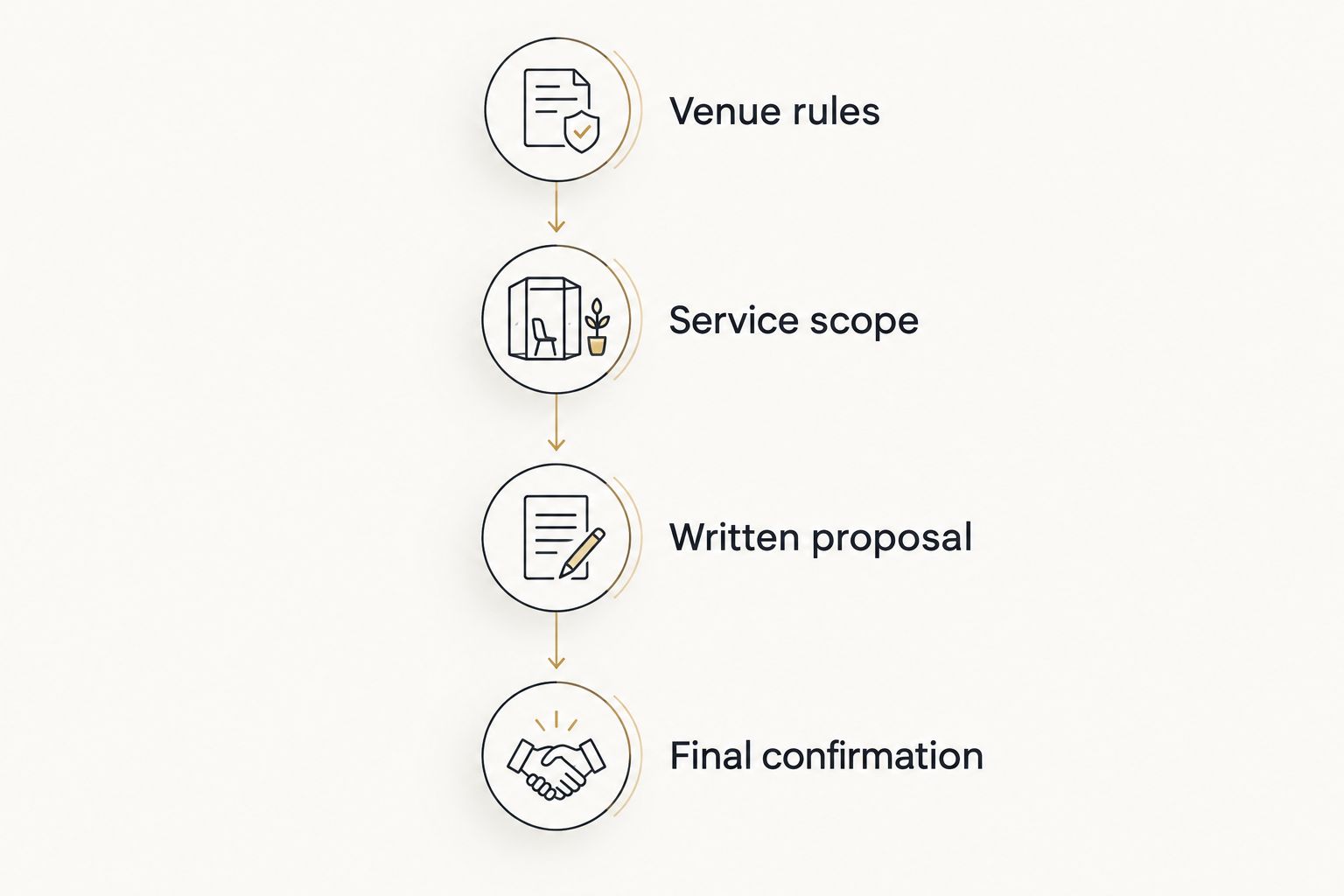
Venue rules
Collect the venue’s requirements in one place. Include the vendor policy, bar location, access instructions, document requirements, and service deadlines.
Forward the actual instructions where possible. A short paraphrase can leave out a condition the provider needs to review.
Service scope
Describe what you want the bar service to cover. Separate your preferred cocktails from the practical questions about alcohol, ingredients, equipment, staffing, and clearing.
Ask the provider to identify exclusions as clearly as inclusions. An explicit exclusion gives you something to assign elsewhere; silence leaves the task unresolved.
Written proposal
Read the proposal against your venue brief, not just against another proposal. Check whether the event date, location, guest count, service window, and responsibilities match your request.
If something changes during discussion, ask for the written scope to reflect it. Keep verbal preferences from becoming the only record of an important decision.
Final confirmation
Before booking, resolve remaining questions about venue approval and the proposed arrangement. Confirm the appropriate event-day contacts and ask how changes should be communicated.
Keep the venue and provider working from the same version of the plan. A revised room layout should not sit in a separate email thread that the bartender never receives.
Should you consider a photo booth at the same time?
You can discuss both services while keeping the decisions separate. Velvetphotobooth provides custom cocktail bartending and rents a full-length mirror photo booth for Los Angeles-area weddings and private events; the mirror format alone does not establish any additional functions or package inclusions.
| Service | Best for | Planning advantage | What still needs confirmation |
|---|---|---|---|
| Custom cocktail bartending | Hosts planning drinks service around their event | Gives you a dedicated service scope to discuss | Alcohol responsibilities, menu, staffing, equipment, and venue approval |
| Full-length mirror photo booth rental | Hosts who want a photo activity at their celebration | Gives you a separate activity to place in the event layout | Dimensions, access, power needs, operating arrangements, and any optional inclusions |
Discussing both with one team gives you one place to raise questions about the two services. It does not establish a combined package, shared staffing, or identical operating hours. Request a separate scope for each service.
Give the photo booth its own venue check. Ask where the full-length mirror can stand, how equipment reaches that position, and what space must remain clear for guests and venue operations.
Give bartending its own check too. Ask how guests reach the bar, where supplies belong, and who approves the final position. Neither service should inherit a location simply because the other already has one.
What should you send with your quote request?
A useful inquiry explains the event and identifies the decisions already confirmed. For a 2026 celebration, send the following brief rather than asking only whether a bartender can attend.
- Event details: Date, wedding or private-party format, venue name, and exact location.
- Location context: Specify whether the event is in Los Angeles, Pasadena, or Long Beach so the provider can assess the location.
- Attendance: Expected guest count and whether the estimate is final.
- Timing: Proposed drinks-service period, vendor access window, and removal deadline.
- Venue approval: Outside-vendor policy, required documents, and the venue contact handling approval.
- Drink preferences: Cocktails you want discussed, other beverage preferences, and questions about alcohol purchasing.
- Responsibilities: Known arrangements for ingredients, ice, glassware, bar equipment, clearing, and waste removal.
- Separate service interests: State explicitly whether you want bartending, a full-length mirror photo booth, or separate proposals for both.
Finish with a direct request: ask the provider to identify inclusions, exclusions, unresolved venue requirements, and the next booking step. That gives the reply a clear purpose.
Request your event quote
Share your date, venue, guest count, and the services you want to discuss.
Can you book a bartender before choosing your venue?
You can begin discussing your event before choosing a venue, but the service plan still needs the location’s rules. Do not treat an early conversation as venue approval.
Ask what information the provider needs before confirming the proposed arrangement. Once you choose the location, send its requirements and revisit any assumptions made during the initial discussion.
Does the venue’s bar mean bartending is included?
A physical bar does not tell you which services are included in your venue agreement. Ask the venue to identify the staffing, supplies, equipment, and cleanup it has actually agreed to provide.
Then send that answer to the prospective bartender. The goal is a complete division of responsibilities, not two parties each assuming the other will handle the same task.
Who should approve the final cocktail menu?
Ask your venue contact and prospective bartender who needs to review the proposed cocktail menu. Establish that process before treating your drink choices as final.
Describe your preferences clearly, then ask about the practical requirements. Ingredients, preparation, serving arrangements, and any venue restrictions belong in the discussion alongside the names of the drinks.
FAQ
What should I ask my wedding venue before hiring a bartender?
Ask whether outside bartenders are allowed, who supplies the alcohol, what documentation is required, and when service must end. Request the answers in writing before confirming the service scope.
Do wedding bartending services automatically include alcohol?
Do not assume wedding bartending services include alcohol. Ask who purchases, delivers, stores, serves, and removes it, and have the proposal identify those responsibilities.
Can I choose custom cocktails for my wedding?
Discuss your preferred cocktails with the provider and ask who needs to approve the menu. Confirm the associated ingredient, preparation, and equipment responsibilities before finalizing it.
What should I include in a bartending inquiry for a 2026 wedding?
Include your event date, exact venue, expected guest count, desired service window, and the venue’s outside-vendor requirements. Add your cocktail preferences and questions about supplies and cleanup.
Does Velvetphotobooth offer bartending separately from a photo booth?
Velvetphotobooth provides custom cocktail bartending and photo booth rentals as distinct services. State which service you want to discuss and request separate scopes if you are considering both.
What type of photo booth should I discuss with the venue?
Discuss a full-length mirror photo booth with the venue. Ask about placement, equipment access, space, and power requirements without assuming additional functions or inclusions.
Should private-party hosts ask the same bartending questions as couples?
Private-party hosts should also confirm permission, alcohol responsibilities, service timing, equipment, and cleanup. At a private property, identify who has authority to approve the setup and event arrangements.
One last thing
Ask who owns the final room plan. Your approved bar position, photo booth placement, supply storage, and guest routes need to appear in the same document rather than in separate vendor conversations.
Before confirming your 2026 arrangements, send that plan to the people responsible for venue approval and service delivery. Ask each to flag conflicts. A clear layout turns an attractive event idea into a practical set of instructions.