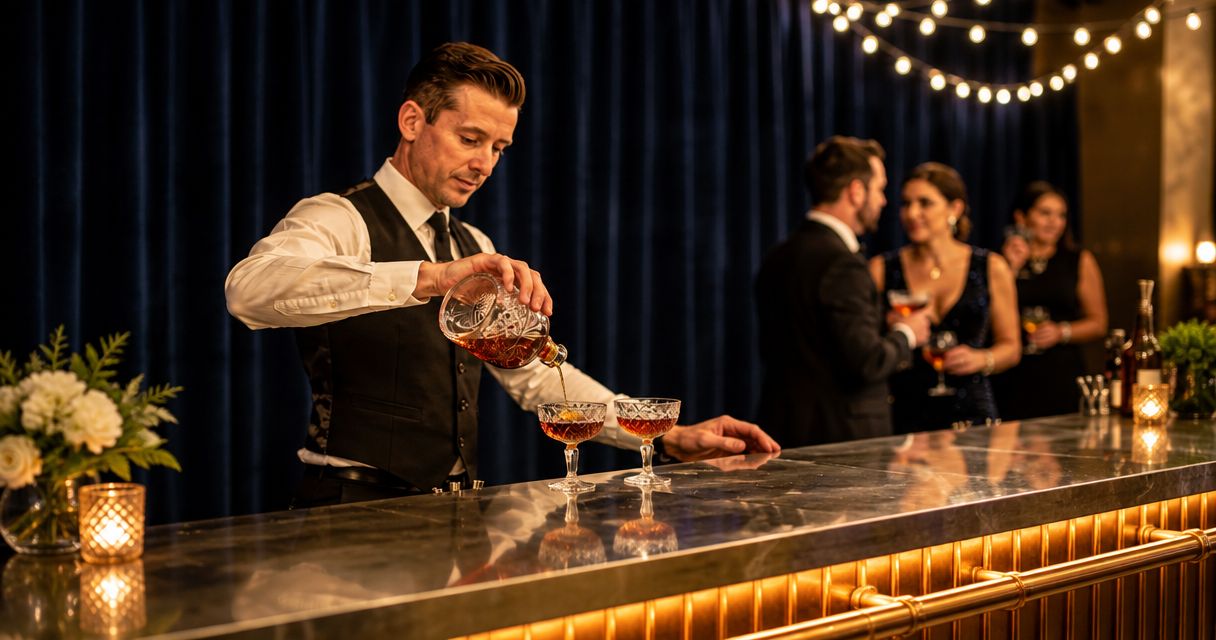
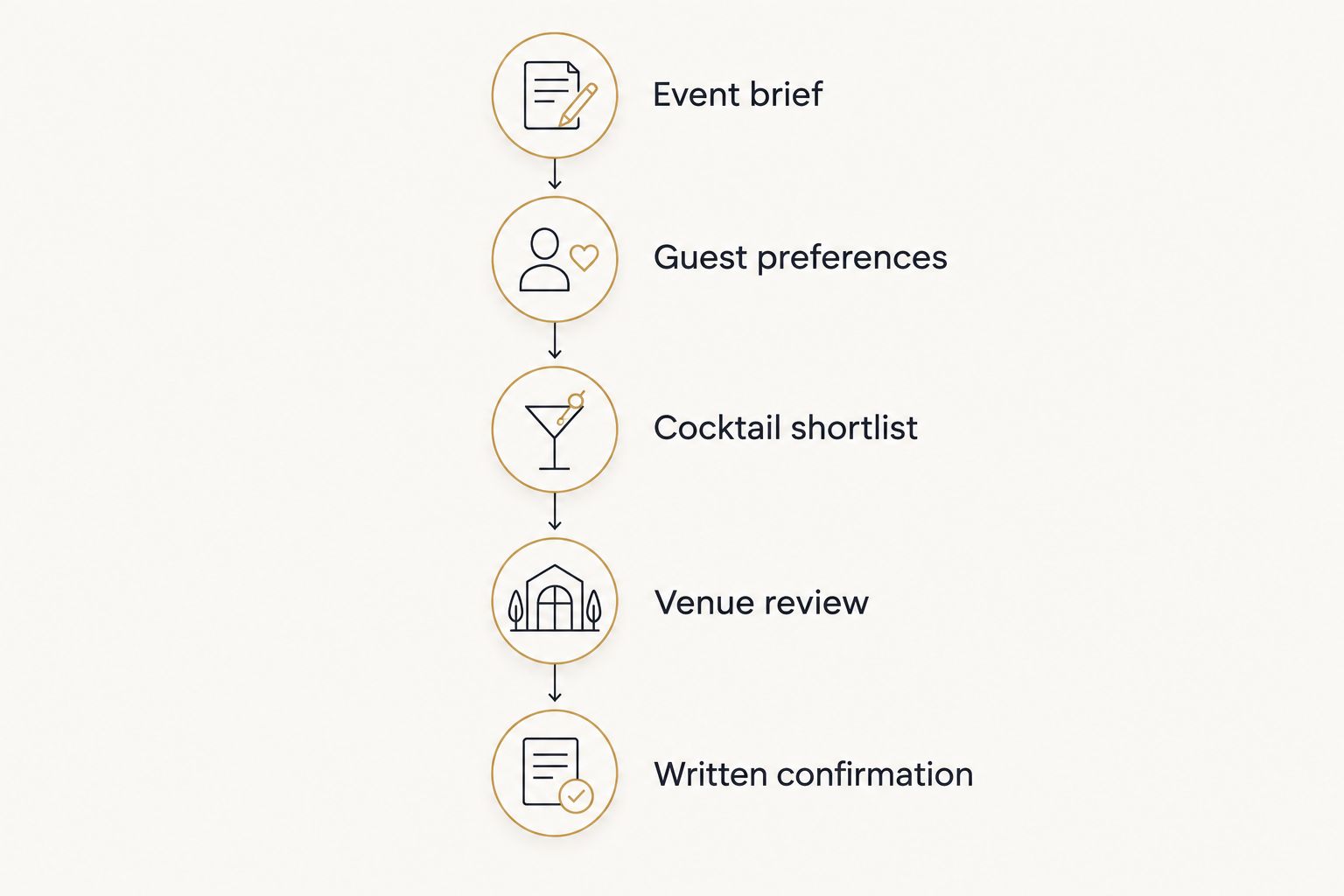
Plan your cocktail menu with your wedding bartender by agreeing on your guests’ preferences, venue requirements, service schedule, and purchasing responsibilities before choosing drinks. Then review each recipe for preparation, ingredients, and presentation, and confirm the final menu and responsibilities in writing.
- Choose your wedding bartender menu around guest preferences, venue requirements, and practical cocktail preparation.
- Velvetphotobooth provides custom cocktail bartending for weddings and private events in the Los Angeles area.
- Ask who supplies alcohol, mixers, ice, glassware, and equipment before comparing quotes.
- Treat a full-length mirror photo booth as a separate service decision, not a required addition.
Why this matters
A cocktail menu is also a service plan. Every drink creates a preparation task, an ingredient list, and a decision about who supplies what. Beautiful names do not answer those questions.
Velvetphotobooth is a fit for Los Angeles couples seeking custom cocktail bartending for their wedding. Start your inquiry with the event details, not just a list of favorite cocktails.
For a 2026 wedding in Los Angeles, Pasadena, or Long Beach, give prospective bartenders the location and venue requirements before asking for a proposal. Ask them to confirm whether they serve your address and can work within the venue’s rules.
How do you plan a cocktail menu with your wedding bartender?
Use the following sequence to move from inspiration to a menu your bartender can evaluate. Resolve responsibilities before approving recipes. A drink list without a purchasing and preparation plan leaves important decisions open.
1. Write the event brief
Send your wedding bartender the date, venue address, estimated guest count, and proposed service hours. Identify which parts of the celebration need bar service, such as cocktail hour, dinner, or dancing. Include venue instructions you have already received.
Describe the atmosphere in plain language. A relaxed garden reception and a formal seated celebration give the bartender different starting points for discussing presentation and service.
Your brief should distinguish confirmed details from open decisions. If your 2026 reception schedule is still a draft, mark it that way rather than presenting tentative times as final.
Private-party hosts can use the same approach. Replace the wedding timeline with the celebration’s actual sequence, including arrivals, food service, speeches, and the planned finish.
2. Describe your guests’ tastes
Tell the bartender what you and your guests enjoy drinking. Use specific preferences: citrus rather than very sweet, spirit-forward rather than fruity, or alcohol-free choices that feel as considered as the cocktails.
Avoid treating your own favorite drink as the entire brief. Ask whether the proposed menu offers enough contrast for the people attending, including guests who do not drink alcohol.
Separate known dietary restrictions from assumptions. Share confirmed ingredient concerns and ask the bartender how recipes, garnishes, and preparation should be reviewed. Do not describe a drink as suitable for a particular restriction without checking its ingredients and handling.
Bring inspiration as a starting point, not a demand to reproduce an unfamiliar recipe. A photograph shows presentation; it does not establish ingredients, preparation, or suitability for your event.
3. Build a focused shortlist
Choose candidate drinks with a clear reason for including each. One might reflect your preferred spirit; another might offer a contrasting flavor profile. An alcohol-free option deserves its own recipe discussion rather than an automatic substitution.
Ask your wedding bartender to explain how the proposed drinks would be prepared during service. Discuss mixing, chilling, garnishing, and any preparation that would happen beforehand.
A focused menu makes the decision easier to review, but focus alone does not make every recipe practical. A short list of elaborate drinks still needs a preparation plan.
Keep a cocktail because it serves your guests, not because its name matches the wedding theme. Names and printed descriptions can come after the recipe decisions.
4. Review the venue and service layout
Ask your venue where the bar can operate and what access is available for setup and removal. Share any written requirements about alcohol service, equipment, glassware, power, water, or cleanup with the bartender.
Discuss where guests will order and collect drinks. The bar location should be considered alongside entrances, dining, entertainment, and other gathering points rather than placed into the remaining space at the end.
Ask the bartender what information is needed to assess the proposed location. Do not assume that an attractive counter or empty corner provides everything required for service.
For outdoor plans, ask the venue and bartender to agree on a weather alternative. Record who decides when the alternative is used and how that changes the layout.
5. Confirm the menu and responsibilities
Request a written summary covering the approved drinks, service schedule, supply responsibilities, and any unresolved decisions. Read it alongside the proposal rather than treating the cocktail names as the complete agreement.
Ask how changes to guest count, recipes, or service hours should be submitted. Confirm the decision dates directly with your provider; do not assume that every detail can change at the same stage.
For your 2026 wedding, keep the current version of the menu and event brief together. Send that version to the relevant venue contact and planner so everyone reviews the same plan.
End with an explicit question: what still needs approval before the menu is ready? That question is more useful than a general request to make everything special.
Which cocktail menu approach fits your wedding?
Choose the approach before discussing individual recipes. Each option changes what you need to review with your bartender, and none removes the need to confirm supplies and service details.
| Menu approach | Best for | Main advantage | Main limitation |
|---|---|---|---|
| Focused signature menu | Couples who want a short, personal selection | Gives the menu a clear identity | Offers less choice for guests with different tastes |
| Broader cocktail selection | Hosts who prioritize variety | Accommodates more stated preferences | Creates more ingredients and preparation details to review |
| Alcohol-free cocktail menu | Celebrations centered on alcohol-free drinks | Makes alcohol-free choices the main experience | Still requires deliberate recipes, supplies, and preparation |
A focused signature menu is a useful starting point when you want meaningful choices without an extensive list. Ask whether the recipes differ enough in flavor to justify including both.
A broader selection suits a different priority: giving guests more choice. Before approving it, ask the bartender how the proposed range affects the supply list and service plan.
An alcohol-free menu should stand on its own. Discuss flavor, presentation, and ingredient information with the same care you would give any other cocktail menu.
Why does a wedding bartender quote vary?
A useful quote reflects a defined event, not just a menu title. Ask prospective providers how each of these details affects their proposal:
- Guest count: Share the estimated attendance and distinguish it from the invitation count.
- Service schedule: Specify the requested start and finish, including any separate service periods.
- Menu preparation: Ask how recipe complexity, garnishes, and advance preparation affect the proposed scope.
- Supply responsibilities: Identify who provides alcohol, mixers, ice, glassware, tools, and other equipment.
- Venue access: Share loading instructions, setup restrictions, and removal requirements.
- Requested additions: Ask whether anything beyond the stated bartending scope requires a separate agreement.
Compare written scope before comparing proposals. Different assumptions about supplies or hours can make otherwise similar requests difficult to evaluate.
Do not treat an unanswered item as an inclusion. Ask the provider to clarify it before you make a booking decision.
What should you include in your quote request?
Give the bartender enough information to respond to your actual event. A clear inquiry reduces the need to reconstruct the plan through scattered messages.
Use this checklist for a 2026 wedding or private celebration:
- Event date, venue name, and full address.
- Estimated guest count and the type of celebration.
- Requested service start and finish.
- Draft menu preferences and alcohol-free requirements.
- Known ingredient restrictions requiring discussion.
- Venue instructions and relevant contact details.
- Supplies you intend to provide yourself.
- Items you want the provider to quote or explain.
- Decisions that remain open.
Then ask for a proposal that separates the service scope from optional requests. Ask what information is needed to finalize the booking and where the cancellation, payment, and change terms are documented.
For Velvetphotobooth custom cocktail bartending, describe the celebration first and ask which arrangements can be proposed for it. Treat staffing, equipment, purchasing, setup, and cleanup as questions to confirm, not assumed inclusions.
Request your wedding bartending quote
Share your event date, location, guest count, menu preferences, and requested service hours.
Should you plan the photo booth alongside the bar?
Plan their locations together if you want both, but evaluate the services separately. A photo booth serves a different purpose from the cocktail menu, and neither needs to justify the other.
Velvetphotobooth offers a full-length mirror photo booth as well as custom cocktail bartending. The mirror format does not establish printing, sharing, props, an attendant, or other inclusions; ask what the proposed rental covers.
For the photo booth, request the required operating space, access needs, setup arrangements, and rental period. Ask what guests receive and which options require separate confirmation. For bartending, review drinks, supplies, service hours, and venue requirements independently.
Getting both services from one team gives you a shared point for discussing the event, but ask who coordinates each part. Do not assume the services share staff, equipment, or identical schedules.
On your 2026 floor plan, show where guests would wait for drinks and where they would gather for photographs. Ask the venue to review both areas so one activity does not occupy the other’s planned space.
When should you choose your signature cocktails?
Choose signature cocktails after discussing the venue, guest preferences, and service schedule with your wedding bartender. Favorite recipes are useful inspiration, but those event details determine what needs further review.
Ask the bartender for the menu decision date and any tasting arrangements. Confirm whether a tasting is offered and what it covers rather than assuming it comes with the service.
Who should buy the alcohol and mixers?
The person responsible for buying alcohol and mixers should be named in the written agreement. Ask who creates the shopping list, checks substitutions, receives deliveries, and handles remaining supplies.
Do not buy against an early draft. Confirm the approved recipes and purchasing responsibilities first, then ask the responsible provider how to proceed.
Can you offer cocktails without alcohol at a wedding?
Yes, alcohol-free cocktails can be planned as deliberate menu choices rather than afterthoughts. Ask your wedding bartender to review ingredients, preparation, and presentation for those drinks alongside the rest of the menu.
If guests have specific ingredient concerns, request a recipe review. A drink name alone does not tell guests everything it contains.
FAQ
What should I tell a wedding bartender before asking for a quote?
Give your wedding bartender the event date, venue address, estimated guest count, requested service hours, and menu preferences. Include venue requirements and identify supplies you expect to provide yourself.
What's the best cocktail menu for a wedding?
The best cocktail menu fits your guests’ preferences, venue requirements, and agreed service plan. Start with a focused shortlist, then ask your bartender whether additional choices serve a clear purpose.
How much does a wedding bartender cost in Los Angeles?
Request an event-specific quote based on your date, location, guest count, service hours, menu, and supply responsibilities. Compare the written scope so each proposal answers the same request.
Does a wedding bartender bring alcohol and glassware?
Alcohol and glassware responsibilities must be confirmed with the provider. Ask for a written list covering drinks, ice, mixers, glassware, tools, equipment, and cleanup.
Can Velvetphotobooth provide wedding bartending and a photo booth?
Velvetphotobooth offers custom cocktail bartending and a full-length mirror photo booth for weddings and private events in the Los Angeles area. Ask about each service separately and confirm the proposed scope for your event.
Can I use the same cocktail planning checklist for a private party?
Yes, private-party hosts can use the same checklist for guest preferences, venue requirements, service hours, menu preparation, and supplies. Replace wedding-specific moments with your celebration’s schedule.
Should I book before the cocktail recipes are final?
Ask the provider which decisions are required to book and which can be finalized later. Confirm the process and deadlines for menu changes in writing.
One last thing
The most useful final menu document includes responsibilities, not just recipes. Beside each unresolved item, name the person who will answer it and the agreed decision date.
Before sending your final 2026 event plan, ask the bartender and venue to flag anything still awaiting approval. A short list of clear decisions gives your celebration a firmer foundation than another page of cocktail inspiration.