Brief your private bartender with your event date, location, guest count, service hours, drink preferences, and a clear list of who supplies what. For a 2026 wedding or private party, also flag venue restrictions and setup access before requesting a quote; a cocktail menu alone does not define the job.
- Give your private bartender an event brief before choosing a cocktail menu.
- Velvetphotobooth provides custom cocktail bartending for Los Angeles weddings and private events.
- Separate confirmed arrangements from questions about alcohol, ingredients, equipment, setup, and cleanup.
- Compare quotes against the same responsibilities, not just the same drink names.
How do you brief a private bartender on your party plans?
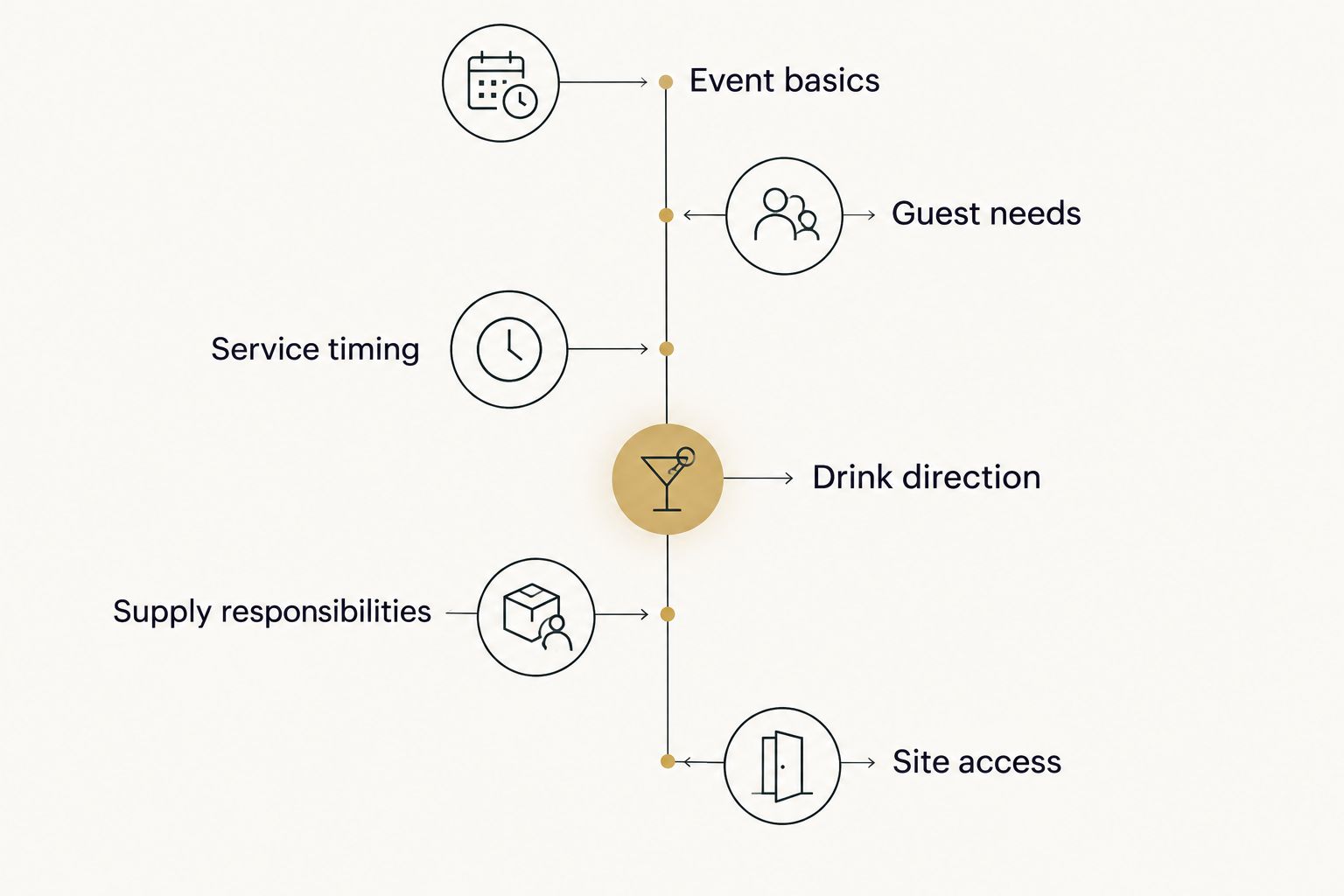
Send one written brief covering the event, guests, timing, drinks, supplies, and site. Mark anything undecided as a question rather than leaving the bartender to assume an answer. Use these 6 steps to prepare a brief that supports a useful quote.
For local hosts, Velvetphotobooth provides custom cocktail bartending for weddings and private events in the Los Angeles area. Velvetphotobooth is a fit for Los Angeles hosts seeking custom cocktail bartending for weddings or private parties.
1. Event basics
Start with the event date, address, event type, and your name as the planning contact. Specify whether you are planning a wedding reception, birthday, anniversary, or another private celebration. Include the venue name when you have one, but do not substitute it for the address.
For a Los Angeles, Pasadena, or Long Beach inquiry, give the actual event location rather than only the city. Ask the provider to confirm service for that address.
Explain the atmosphere in plain terms. A seated dinner with drinks before the meal calls for a different conversation from a party built around mingling. Describe what guests will be doing, not just how you want the celebration to feel.
2. Guest needs
Share your expected guest count and explain whether it is confirmed or still changing. Distinguish the total invitation list from the guests you expect to request bar service. Do not turn an early estimate into a final commitment.
Describe preferences without guessing what every guest will drink. Mention known requests for alcohol-free drinks, ingredient exclusions, or particular cocktail styles. Ask how the bartender handles those requests and what information is needed before the menu is agreed.
For ingredient allergies, communicate the specific concern directly. Ask about preparation and handling rather than assuming that removing an ingredient makes a drink suitable. Keep sensitive guest information limited to what the service team needs.
3. Service timing
List guest arrival, the requested bar opening and closing times, and any planned pauses. For weddings, identify where drinks fit around the ceremony, dinner, and speeches. For private parties, name the moments when you want guests gathered elsewhere.
Keep guest-facing service separate from access for preparation and departure. Ask when the bartender needs to arrive and what must be ready before service starts. Confirm how those arrangements appear in the quote.
A useful brief also names the person who can answer questions on the day. Choose someone who knows the plan and can make agreed decisions, so you are not the only contact while greeting guests.
4. Drink direction
Describe flavors you enjoy: citrus-led, spirit-forward, herbal, sweet, or alcohol-free. Add clear dislikes. This gives a custom cocktail discussion more direction than asking for something elegant or festive.
Treat a favorite cocktail as a starting point, not a complete menu specification. Ask which ingredients, preparation, and serving arrangements the proposed drinks require. Discuss whether the menu suits the setting and the way you want service to work.
Choose drinks after discussing the event, not before. A visually appealing idea still needs an agreed recipe, ingredient responsibility, and practical serving plan. Ask for those details in writing before treating a proposed menu as final.
5. Supply responsibilities
Create 2 lists: items you will provide and items you want the bartender to quote. Put unresolved items in a separate questions column. This keeps a request for help from becoming an assumed inclusion.
Ask specifically about alcohol, mixers, garnishes, ice, drinking vessels, bar tools, serving surfaces, and waste handling. These are questions to resolve, not a list of standard inclusions. Establish who purchases, transports, stores, and removes each relevant item.
If you want purchasing guidance, say so explicitly. Do not buy from an unconfirmed shopping list or assume the bartender will bring replacements. Ask how changes to guest numbers or drink choices should be handled before making purchases.
6. Site access
Describe where you expect the bar to sit and how equipment reaches that spot. Flag stairs, loading arrangements, parking instructions, and any restricted access periods. Ask what the provider needs to assess before agreeing to the setup.
For an outdoor event, explain the intended location and ask what shelter or alternative arrangement is required. Share the venue's actual rules rather than relying on what happened at another event.
Ask the venue and provider to confirm any applicable alcohol-service requirements directly. Your brief should record the relevant contact and unresolved questions; it should not stand in for their approval.
Why this matters
A useful brief makes the difference between a conversation about attractive drinks and an agreement about your event. You need both. The menu describes what guests receive; the scope describes what you and the bartender are responsible for arranging.
For a 2026 booking, keep those decisions in a single current document. When the guest count, location, or schedule changes, update the brief and ask whether the written scope needs to change too.
This also makes quote comparisons clearer. Compare the same requested service, hours, and responsibilities before deciding which proposal fits. An unanswered question is not an inclusion, and a verbal preference is not a confirmed arrangement.
How should a wedding brief differ from a private-party brief?
Start with the same core information, then explain the schedule that matters to your event. Neither format needs a more elaborate menu simply because of its name. Choose the emphasis that matches how your guests will gather.
| Planning emphasis | Best for | Useful detail to include | Limitation to address |
|---|---|---|---|
| Wedding schedule | Couples coordinating distinct reception moments | Ceremony finish, drinks period, dinner, speeches, and planned service pauses | A schedule alone does not explain supply responsibilities |
| Private-party flow | Hosts planning mingling, dinner, or a central celebration | Guest arrival pattern, meal timing, and the main gathering moment | A relaxed atmosphere still needs defined service hours |
For a wedding, ask who will communicate schedule changes to the bartender. Avoid making the couple the only source of instructions once the reception begins.
For a private party, describe what flexible timing actually means. If you have not chosen an end time, mark it as undecided and request guidance rather than implying open-ended service. Both types of hosts benefit from a clear plan without scripting every guest interaction.
Why a private bartender quote varies
A quote needs a defined event behind it. Include these details so the provider can explain what the proposal covers and which decisions still need your approval:
- Location and access: Give the address, intended bar position, and any loading or access restrictions. Ask how those details affect the proposed arrangements.
- Requested hours: Separate drink service from preparation and departure. Ask which periods the quote covers.
- Guest count: State your current estimate and ask how to report a change. Do not assume a staffing arrangement from the guest count alone.
- Cocktail requirements: Describe the requested menu and alcohol-free needs. Ask which preparation and ingredient responsibilities follow from those choices.
- Supply scope: Identify what you provide and what you want quoted. Request an explicit answer for every unresolved item.
- Venue requirements: Share the rules you have received. Ask the venue and provider to resolve requirements that fall outside your role as host.
These are briefing questions, not promises about a particular package. Ask the provider to explain the proposal in terms you can match back to your event.
A private bartender brief you can copy
Use this outline for your 2026 inquiry. Replace each prompt with your event details, and write “undecided” wherever you need advice. A clear open question is more useful than an answer you have not actually agreed.
- Event: Wedding or private celebration; date; venue name; full address.
- Contact: Planning contact; event-day decision-maker; preferred way to communicate.
- Guests: Expected attendance; confidence in that estimate; known drink preferences and ingredient concerns.
- Schedule: Guest arrival; requested service start and finish; meal timing; planned pauses.
- Drinks: Preferred flavors; drinks you dislike; alcohol-free requests; ideas you want discussed.
- Supplies: What you will provide; what you want quoted; items requiring clarification.
- Site: Proposed bar location; loading route; stairs; parking instructions; indoor or outdoor setting.
- Venue questions: Rules already supplied; venue contact; approvals still needed.
- Quote request: Ask for the proposed scope, responsibilities, exclusions, and next booking steps.
Finish with a short priority statement. For example, explain whether your main concern is a focused cocktail menu, clear supply responsibilities, or fitting service around dinner. This helps the conversation stay centered on your celebration rather than on optional extras you have not requested.
Ask Velvetphotobooth to respond to the bartending brief as its own service request. If you are also considering a photo booth, identify that as a separate inquiry rather than assuming it forms part of the bartending quote.
Discuss your party plans
Share your event date, location, guest count, and requested bartending scope.
Should I send the menu before asking for a quote?
Send 1 written brief before treating the menu as final. Include favorite drinks, but ask the bartender to discuss them alongside the guest count, service window, and supply arrangements.
The advantage is a focused conversation about what you want. The limitation is that a drink list by itself leaves preparation, ingredients, and serving responsibilities unresolved. Request a proposed menu and a proposed scope together.
What should I confirm before booking a private bartender in 2026?
Confirm 1 written scope that matches your current event brief. Review the date, address, requested service hours, agreed responsibilities, exclusions, and the provider's booking terms before proceeding.
Ask what happens if your plans change and how changes must be communicated. Do not treat an informal conversation as confirmation of an arrangement that does not appear in the booking documents.
Should I discuss a photo booth in the same inquiry?
Discuss the 2 services in the same inquiry only if you actually want both. Getting answers from one team can keep the conversation together, but bartending and photo booth requirements still need separate decisions.
Velvetphotobooth offers custom cocktail bartending and a full-length mirror photo booth. For the booth, ask about the proposed placement, access needs, and what the quote includes; do not infer interactive features or package contents from the mirror format.
Keep the services distinct in your planning notes. A bartender brief should explain drinks and service responsibilities, while a booth brief should explain the photo experience you want and the space available. Confirm each scope on its own merits.
FAQ
What information does a private bartender need for a quote?
A private bartender needs your event date, address, guest count, requested service hours, drink direction, and supply questions. Share venue restrictions and access details so the proposed scope reflects the event.
Do I need to supply the alcohol for a private bartender?
Confirm who supplies the alcohol before booking or purchasing anything. Ask the provider to put alcohol, mixers, garnishes, ice, and other supply responsibilities in writing.
Can I request alcohol-free cocktails for my party?
Include alcohol-free cocktails in your brief and ask the provider to confirm the proposed options. Explain relevant ingredient concerns and ask how preparation and handling will be addressed.
How do I brief a bartender for a wedding reception?
Give the bartender the reception schedule alongside the guest count, drink preferences, and supply responsibilities. Identify service pauses and the person authorized to communicate event-day changes.
Does a mirror photo booth come with bartending?
Do not assume the services are included together. Velvetphotobooth offers custom cocktail bartending and a full-length mirror photo booth; request and confirm the scope for each service you want.
What should I do if my guest count changes?
Update your written brief and notify the provider before treating the original scope as final. Ask whether the changed count affects the proposed arrangements or booking documents.
One last thing
The most useful line in your brief is the list of decisions still open. Put those questions at the top of your 2026 planning folder, not at the bottom of a long message. Ask for an answer, identify who owns the decision, and update the brief when it is settled.
That simple habit keeps a thoughtful idea from becoming an unspoken expectation. Send the brief, request a written quote, and confirm the responsibilities before you book.