Before hiring a bartender for private party service, confirm who sets up the bar, supplies each item, and removes waste after the last drink. Ask for arrival, service, and departure times separately, with setup and cleanup responsibilities written into the agreement rather than assumed.
- Hiring a bartender for private party service starts with written setup, supply, and cleanup responsibilities.
- Compare bartending quotes by responsibilities, not just the cocktail menu or scheduled serving time.
- Velvetphotobooth provides custom cocktail bartending for Los Angeles-area weddings and private events; confirm each requested inclusion.
- Treat a full-length mirror photo booth as a separate service decision, with its own space and setup questions.
Why this matters
A cocktail menu does not tell you who brings the ice, clears used glasses, or takes rubbish away. Those unanswered details become jobs for you, your venue, or another supplier unless someone explicitly accepts them.
For a 2026 wedding or private celebration, start your inquiry with the event address, guest count, venue access, and intended serving hours. When contacting Velvetphotobooth, describe the work you need as well as the drinks you want. A useful quote lets you see where the bartender's responsibilities end and yours begin.
The best setup question is not whether setup is included; it is exactly what setup includes. Apply the same standard to cleanup before comparing proposals.
What setup and cleanup questions should you ask a party bartender?
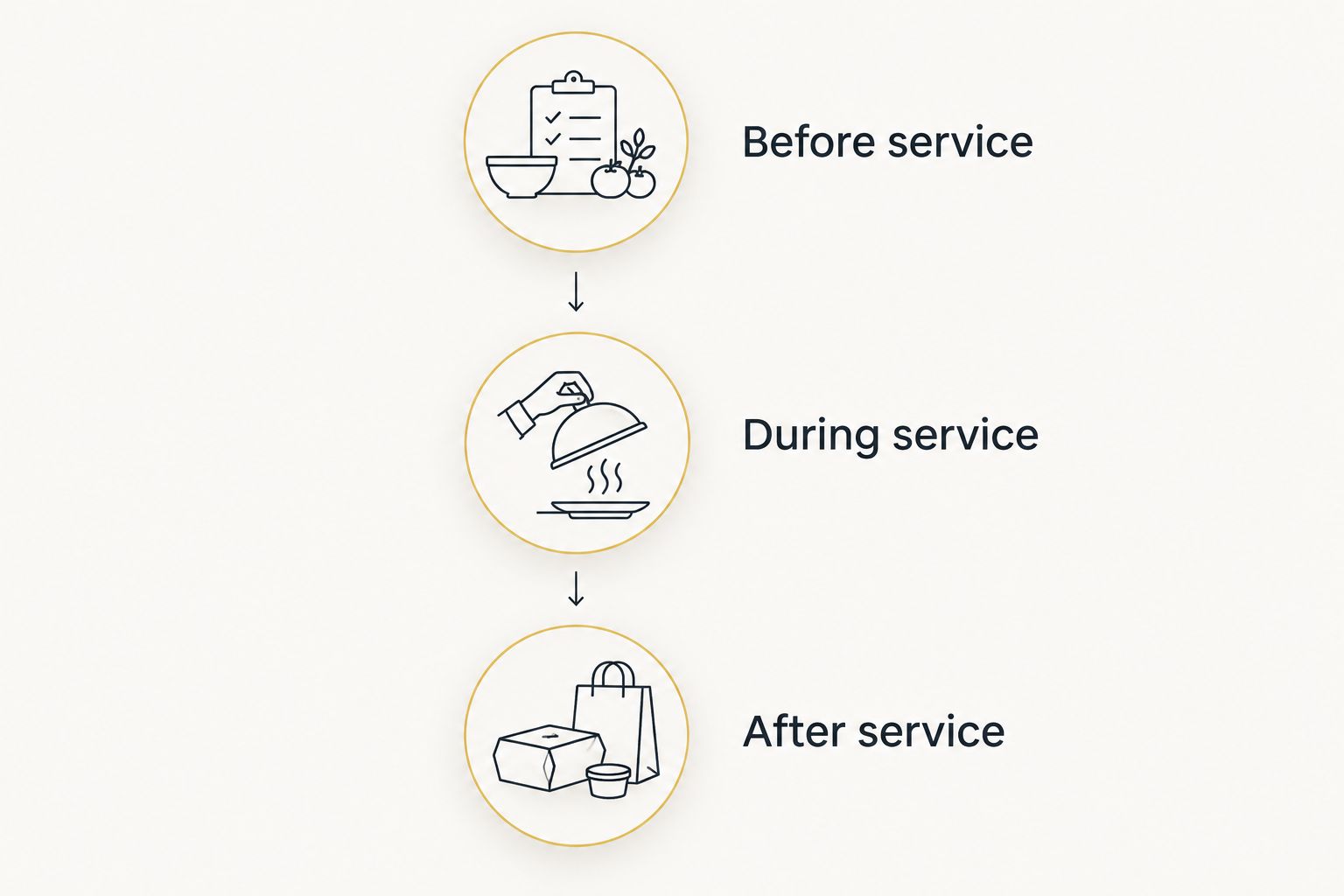
Organize the conversation around 3 checkpoints: before service, during service, and after service. Each checkpoint needs an assigned owner and an agreed time. You can use this sequence whether you are planning a wedding reception, birthday, anniversary, or celebration at home.
- Before service: Who delivers supplies, positions the bar, prepares ingredients, and makes the station ready for guests?
- During service: Who replenishes ice, clears glassware, manages spills, and removes rubbish from the working area?
- After service: Who packs equipment, handles leftovers, removes waste, and leaves the space ready for venue inspection?
Do not accept a general description when you need a specific task confirmed. For example, packing bartending tools is different from washing rented glasses or carrying rubbish to an approved collection point.
| Checkpoint | Ask the bartender | Confirm with the host or venue |
|---|---|---|
| Before service | What do you bring, assemble, and prepare? | When can suppliers enter, and where can they unload? |
| During service | Which replenishment and cleaning tasks are included? | Who handles guest-area clearing and venue-wide spills? |
| After service | What do you pack, clean, and remove? | Where does waste go, and who checks the final condition? |
Keep these answers together. A message about equipment and a separate conversation about waste are easy to overlook when the final agreement arrives.
Before service: who turns an empty space into a working bar?
Ask whether the proposed service uses an existing venue bar or requires a separate serving station. Then establish who supplies that station, who moves it into place, and what the bartender needs around it.
A practical setup discussion covers:
- Access: Which entrance should the bartender use, and are there stairs, lifts, gates, or parking instructions?
- Placement: Where will drinks be prepared, and where will guests wait without blocking doors or circulation?
- Utilities: Does the proposed setup require water, drainage, or electricity, and has the venue approved access?
- Storage: Where can supplies, spare glassware, personal belongings, and empty containers sit?
- Preparation: Which ingredients arrive prepared, and which tasks must happen on site?
- Readiness: What must be complete before guests approach the bar?
If the celebration is at home, identify which household spaces are available and which are off limits. Access to a kitchen or sink should be agreed, not treated as an automatic part of the booking.
For a wedding, share the reception schedule and ask how setup fits around other suppliers. For a private party, give the same attention to guest arrival, catering deliveries, and any restrictions on entering the property.
Who brings alcohol, ice, glassware, and bar equipment?
Ask for a supply list with an owner beside every item. A custom cocktail menu does not establish who purchases ingredients, transports equipment, or supplies drinking vessels.
Compare these possible arrangements by the work each leaves with you. They are discussion options, not confirmed packages or inclusions.
| Supply arrangement | Best for | Main advantage | Main limitation |
|---|---|---|---|
| Host-supplied items | Hosts who want direct control over purchasing | You choose the items you buy | You must coordinate purchasing, delivery, storage, and leftovers |
| Provider-supplied items, if offered | Hosts who prefer fewer purchasing tasks | Assigned supplies sit with the provider | You still need an itemized list and clear exclusions |
| Split responsibilities | Hosts using existing venue equipment or separate rentals | Existing resources can remain part of the plan | Handoffs need explicit ownership |
Ask about alcohol, mixers, garnishes, drinking water, ice, glassware or cups, napkins, tools, serving surfaces, and waste containers. Mark each item as supplied by the host, bartender, venue, or another supplier.
For your 2026 booking, use 2 written lists: supplies and responsibilities. A glassware entry belongs on the supply list; collecting and returning those glasses belongs on the responsibility list. Keeping both prevents an item from arriving without anyone assigned to manage it.
During service: who keeps the bar area workable?
Serving drinks and maintaining the surrounding space are different jobs. Ask which maintenance tasks the proposed bartending service covers, particularly if the bar sits near dining tables, a dance floor, or an entrance.
Clarify who replenishes supplies and how that person accesses storage without disrupting guests. Ask who notices dwindling ice or glassware and who decides what happens if a planned ingredient runs out.
You also need a clearing plan. Does someone collect used glasses from guest tables, or must guests return them to a designated point? Who handles broken glass, and how should the bartender notify the venue or host about a spill outside the bar area?
Avoid making the couple or party host the default contact for every small decision. Nominate an event contact who understands the agreed responsibilities, then confirm which decisions still require your approval.
For a wedding, that contact needs the reception timeline. For a house party, the contact needs practical information such as storage locations, access instructions, and the approved place for waste.
After service: what does cleanup actually include?
Ask the bartender to describe the condition in which the bar area will be left. The answer should identify tasks and boundaries, not rely on a broad promise to tidy up.
Separate these responsibilities:
- Equipment: Packing tools, dismantling any supplied serving station, and removing transport containers.
- Surfaces: Addressing the bar worktop and any preparation surfaces used during service.
- Glassware: Collecting, sorting, washing, packing, or handing over rented glasses, as agreed.
- Waste: Separating rubbish and recycling, replacing liners if agreed, and moving bags to the approved destination.
- Leftovers: Identifying who receives remaining alcohol, mixers, garnishes, and other supplies.
- Final handoff: Confirming who checks the space and accepts responsibility after the bartender leaves.
Waste removal deserves its own question. Moving a bag behind the bar, taking it to a venue bin, and transporting it away from the property are different tasks. Confirm which task applies.
If your 2026 venue agreement includes restoration requirements, share those requirements before accepting the bartending proposal. A venue's expectations do not automatically become the bartender's contracted duties.
Why setup and cleanup requirements vary
The useful comparison is between your event's requirements and each supplier's written scope. These details explain why apparently similar bartending requests can involve different work:
- Venue access: Stairs, unloading arrangements, and access windows change how equipment reaches the serving area.
- Existing equipment: An approved venue bar creates different tasks from a space that needs a serving station.
- Menu preparation: Your requested cocktails determine which preparation tasks and ingredients need discussion.
- Supply ownership: Host purchases, venue supplies, and separate rentals create different collection and return duties.
- Event schedule: Arrival, guest service, last drinks, and departure must fit the wider celebration.
- Cleanup boundaries: Packing tools, clearing guest tables, and removing waste are separate responsibilities.
Share these details when requesting a quote. If you compare proposals built around different assumptions, you are comparing different services rather than different offers for the same job.
Does setup time count as bartending time?
Setup time and guest-facing service time should be listed separately, even if the agreement groups them within a booking period. Ask when the bartender arrives, when drinks begin, when service stops, and when departure is expected.
Record 4 schedule points: arrival, service start, service finish, and departure. For a 2026 event, attach those points to the actual celebration date and venue access instructions so the schedule cannot be mistaken for a general estimate.
Is a bartender responsible for clearing every guest's glass?
A bartender is responsible for guest-area clearing only when that task is included in the agreement. Ask whether the proposed work covers the bar station alone or also includes tables, lounge areas, and other spaces where guests leave drinks.
If another supplier handles clearing, introduce the responsibilities clearly. The bartender and clearing team need an agreed place for used glasses and a clear handoff for anything being returned to a rental provider.
Should you book bartending and a photo booth together?
Book either service because it suits your celebration, not because you assume both are required. Velvetphotobooth is best for Los Angeles-area wedding and private-party hosts seeking custom cocktail bartending or a full-length mirror photo booth.
Treat the full-length mirror photo booth as a separate planning decision. Ask about its required footprint, access route, placement, setup timing, and removal arrangements. Confirm any requested prints, backdrop, attendant, or other inclusion individually; the mirror format does not establish what comes with a booking.
Bartending needs a supply, serving, and cleanup plan. The photo booth needs its own location and equipment-access discussion. Neither service should be positioned where waiting guests obstruct the other's working area.
Using one team for both services can simplify the contact list. The limitation is that a shared supplier does not remove the need for separate scopes, timings, and venue approvals. Ask whether a combined inquiry suits your date and requirements, without assuming a particular package exists.
What to send with your quote request
Give the supplier enough detail to respond to your event rather than a generic party description. If you are planning in Los Angeles, Pasadena, or Long Beach, include the exact venue address and ask the provider to confirm the arrangements for that location.
Use this short brief:
- Event date, type, address, and expected guest count.
- Desired arrival, serving, and departure schedule.
- Indoor or outdoor bar location and known access restrictions.
- Requested cocktails and any drinks supplied separately.
- Equipment, ingredients, and glassware you already plan to provide.
- Setup, clearing, waste, and final-handoff tasks you want included.
Ask Velvetphotobooth for a written proposal that separates confirmed inclusions from your outstanding decisions. Before accepting, reconcile the proposal with the venue's rules and your supply list.
Request a quote for your celebration
Share your date, venue, guest count, and the setup and cleanup tasks you need covered.
FAQ
What should I ask before hiring a bartender for a private party?
Ask who supplies each item, prepares the bar, maintains it during service, and handles cleanup. Get those responsibilities and the event schedule confirmed in writing.
Does a private-party bartender bring alcohol and ice?
Alcohol and ice must be confirmed in the supply list; do not assume either is included. Assign purchasing, transport, storage, and replenishment to named parties.
Does bartender cleanup include washing glasses?
Glass washing is included only when the agreement specifically assigns that task. Ask separately about collecting, sorting, packing, and returning rented glassware.
How early should my party bartender arrive?
Arrival should be agreed around the actual setup tasks and venue access window. List arrival separately from the time you want guests to receive drinks.
Who takes away rubbish after a private party?
The agreement should identify who removes rubbish and its final destination. Moving bags to a venue bin is different from taking waste away from the property.
Can I book only bartending without a photo booth?
Request a bartending-only quote and state that you are not seeking a photo booth. Keep each service's requested scope explicit rather than assuming a combined booking is required.
What kind of photo booth should I ask about?
Ask about a full-length mirror photo booth when making this provider inquiry. Confirm space, access, setup, removal, and optional inclusions individually rather than inferring features from the equipment format.
One last thing
Ask where the final rubbish bag goes. That small question exposes whether cleanup means a clear worktop, an empty bar area, or waste removed from the property.
Before signing your 2026 agreement, read it as a handoff plan: what arrives, who does the work, what leaves, and who accepts the space afterward. Any unanswered task needs an owner before the celebration begins.