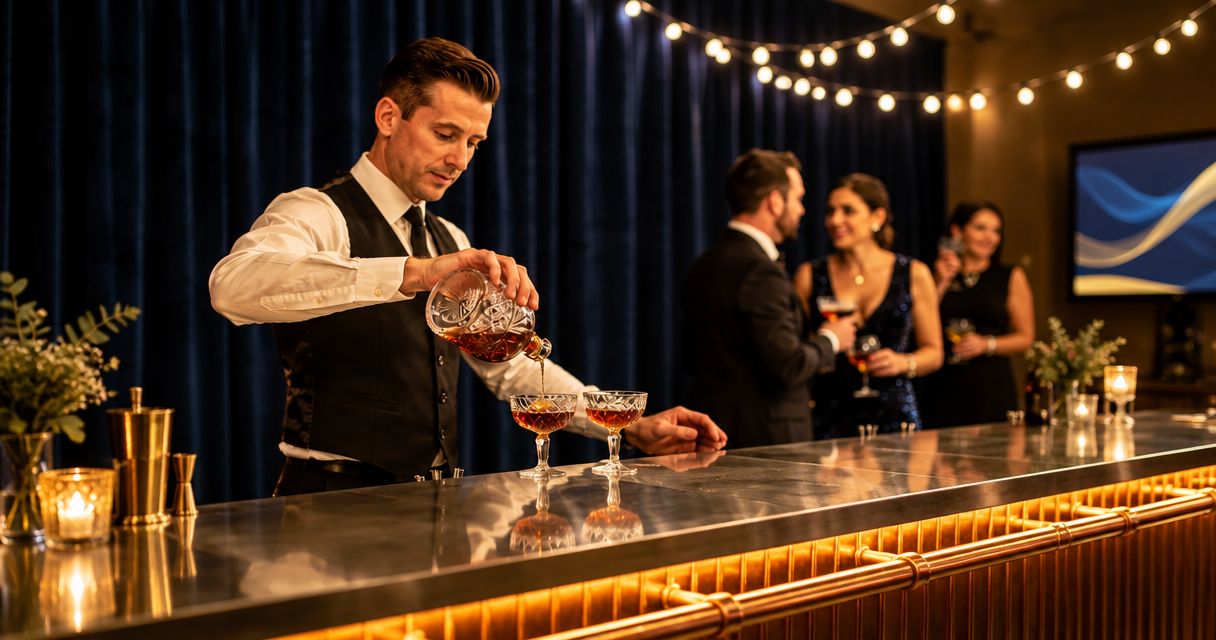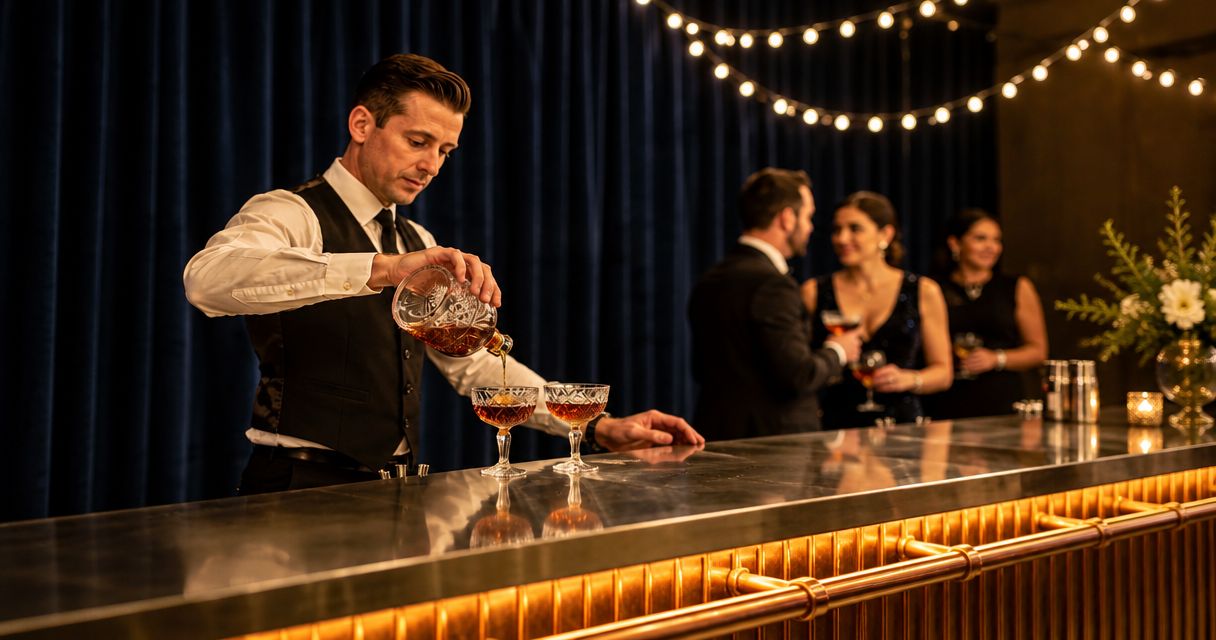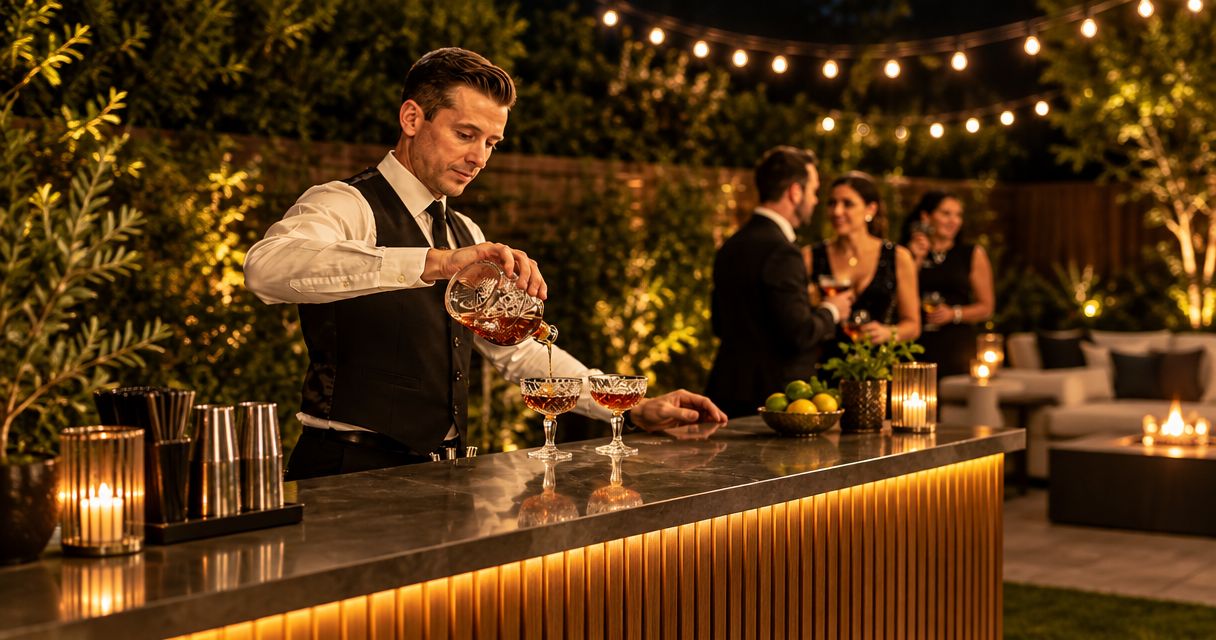
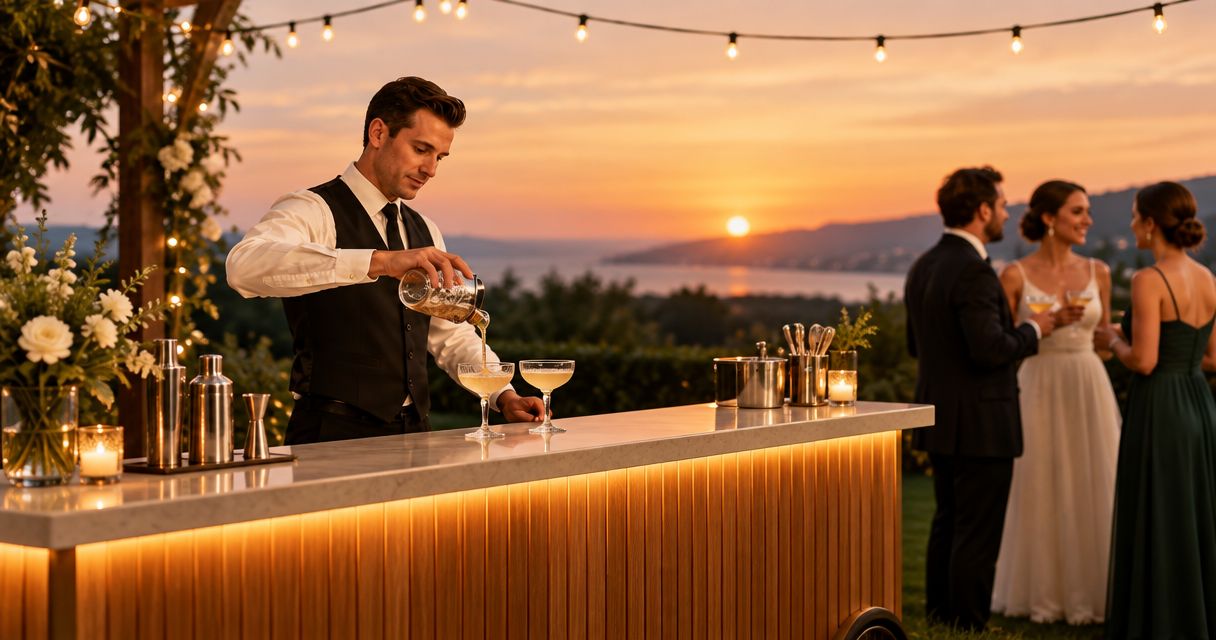
Best overall: a straight mobile bar. Best for a corner: an L-shaped bar. Best for separate guest areas: two service points. This 2026 guide compares outdoor wedding bar layouts and explains what to confirm when requesting custom cocktail bartending from Velvetphotobooth.
- Best mobile bar configurations outdoor wedding hosts can choose: straight for flexibility, L-shaped for corners, dual for separate queues.
- Velvetphotobooth offers custom cocktail bartending for weddings and private events in the Los Angeles area.
- Choose the layout around access, working space, guest movement, and weather protection—not appearance alone.
- Request separate details for bartending and a full-length mirror photo booth; neither service requires a combined booking.
Why the bar layout matters
An outdoor wedding bar needs more than a good-looking front. Guests need an obvious place to order, bartenders need room to work, and the venue needs clear routes around the setup. A layout that suits an empty lawn can become awkward once chairs, catering equipment, and guests arrive.
For a 2026 wedding in Los Angeles, Pasadena, or Long Beach, start with the actual site plan. Ask the venue where service is permitted and what weather arrangements it requires. Then choose the bar shape that fits those boundaries.
Velvetphotobooth is best suited to hosts seeking custom cocktail bartending for a Los Angeles wedding or private party. Ask which bar arrangements the team can support at your venue; the configurations below are planning options, not a list of confirmed rental inventory.
What makes the best outdoor wedding bar configuration?
Judge each option against these criteria before choosing its appearance:
- Guest approach: Guests should recognize where to order without blocking a doorway, dining aisle, or dance floor.
- Working space: Confirm room for preparation, supplies, waste handling, and safe movement behind the service front.
- Venue access: Check the route from unloading to the final position, including gates, steps, slopes, and surface conditions.
- Weather protection: Agree on shade, shelter, and a relocation plan with the venue and service provider.
- Service scope: Match the arrangement to the drinks being served and the timing of guest arrivals.
- Separate activity zones: Keep bar queues distinct from photo-taking, catering access, and other gathering points.
Do not approve a layout using the guest-facing sketch alone. Ask to see how the working side connects to supplies and how guests leave after collecting drinks.
Outdoor wedding bar configurations at a glance
These 2026 recommendations rank layouts by their clearest use case, not by an assumed staffing level or unverified service capacity.
| Configuration | Best for | Standout feature | Key limitation |
|---|---|---|---|
| Straight mobile bar | A flexible starting layout | One clear service front | The queue needs somewhere to go |
| L-shaped bar | A suitable corner or perimeter position | Connected surfaces on adjoining sides | The corner can restrict working movement |
| Two service points | Separate guest areas | More than one ordering destination | Supplies and staffing need separate planning |
| Main bar with satellite station | Different drink-service needs | A distinct destination for a defined drink selection | Guests need clear directions |
| Trailer bar | A vehicle-accessible outdoor setting | A fixed serving structure | Vehicle access and hatch placement constrain positioning |
1. Straight mobile bar: best for a flexible starting layout
A straight bar presents one main face to guests. It is the clearest starting point when you want to assess the service area without designing around a corner or vehicle.
Place it where the queue can extend without crossing the main walking route. Confirm the working space behind it before deciding how close it belongs to a wall, hedge, or tent edge.
Straight mobile bar pros:
- Gives guests an obvious ordering destination.
- Makes the service front easy to identify on a floor plan.
- Avoids an internal corner in the bar structure.
Straight mobile bar cons:
- A single queue can interfere with nearby activities if poorly positioned.
- A simple front does not solve storage or weather protection behind it.
Best for: Couples and private-party hosts who want a straightforward layout to discuss with their venue and bartender.
Ask where preparation happens and which surfaces belong in the working area. Do not assume the visible counter is the complete setup.
Verdict: Buy into this layout first; change it only when the site gives you a clear reason.
2. L-shaped bar: best for a suitable corner
An L-shaped arrangement joins two surfaces at a corner. It suits a site where an adjoining service or preparation surface fits naturally along the perimeter.
Decide which side guests will approach. An L shape does not automatically mean both sides should accept orders, and an unclear approach can create competing queues.
L-shaped bar pros:
- Places adjoining work surfaces within one connected arrangement.
- Gives a corner location a defined service boundary.
- Allows you to discuss separate ordering and preparation faces.
L-shaped bar cons:
- The inside corner can restrict movement if working clearance is tight.
- Two exposed faces can confuse guests unless their roles are clear.
Best for: Outdoor receptions with a usable corner and enough room behind both sides.
Ask the bartender to review the corner, not just the overall footprint. A visually tidy perimeter position is not useful if staff must repeatedly squeeze past supplies.
Verdict: Buy for a suitable corner; skip when the working side feels compressed.
3. Two service points: best for separate guest areas
Two service points give guests two distinct places to order. Consider this arrangement when the event genuinely uses separate areas rather than placing both bars beside each other without a purpose.
For example, discuss whether a ceremony gathering space and a reception area need different service arrangements. Confirm whether the points operate together or at different stages of the event.
Two service points pros:
- Creates an ordering destination in each designated area.
- Lets the floor plan account for separate gathering spaces.
- Supports a discussion about service before and after a location change.
Two service points cons:
- Each working area needs its own supply and staffing plan.
- Moving drinks or equipment between locations requires an agreed route.
Best for: Weddings and private parties with clearly separated guest spaces.
Do not treat a second counter as a substitute for a service plan. Ask who works at each point, where replenishment comes from, and how guests know which location is operating.
Verdict: Buy for genuinely separate areas; skip duplication without a defined purpose.
4. Main bar with satellite station: best for distinct drink selections
A satellite station gives a specific drink selection its own destination while the main bar handles the broader menu. The distinction is its purpose, not simply its distance from the main bar.
Discuss a separate nonalcoholic drink station or another clearly defined selection with your provider. Confirm preparation, supervision, and service responsibilities rather than assuming the station runs itself.
Main bar with satellite station pros:
- Separates a defined drink selection from the main ordering point.
- Gives guests a clear destination when the station is well identified.
- Lets you plan different service needs independently.
Main bar with satellite station cons:
- An unclear menu sends guests between stations.
- Supplies, used glassware, and waste still need attention at the satellite.
Best for: Hosts with a specific reason to separate part of their drink service.
Keep the station's purpose narrow. If guests can request the same full menu everywhere, you are planning multiple bars rather than a distinct satellite.
Verdict: Buy for a defined drink-service role; skip an extra station with no clear job.
5. Trailer bar: best for a vehicle-accessible setting
A trailer bar places service inside a towable structure with a serving opening. Its position depends on the vehicle's access route and the orientation of that opening.
Ask the venue to approve the proposed position before choosing this format. Confirm turning access, ground suitability, overhead clearance, and any requirements for placing the trailer on site.
Trailer bar pros:
- Provides a clearly defined physical serving structure.
- Establishes a visible ordering face at the serving opening.
- Gives the site plan a fixed bar footprint to work around.
Trailer bar cons:
- Access constraints can rule out an otherwise attractive position.
- The serving opening limits which direction the bar faces.
Best for: Outdoor venues that explicitly approve vehicle access and trailer placement.
Do not assume the trailer includes refrigeration, power, water, shelter for waiting guests, or particular equipment. Confirm each requirement with the provider.
Verdict: Hold until the venue and provider approve access and placement.
How these configurations are ranked
The straight bar leads because its single service front provides a clear starting point for planning. The remaining options solve more specific problems: corners, separate areas, distinct drink selections, or vehicle-based service.
This is a layout comparison, not a performance test or a ranking of rental companies. Your venue's restrictions and your bartender's working requirements take priority over the order above.
Plan the space around the bar
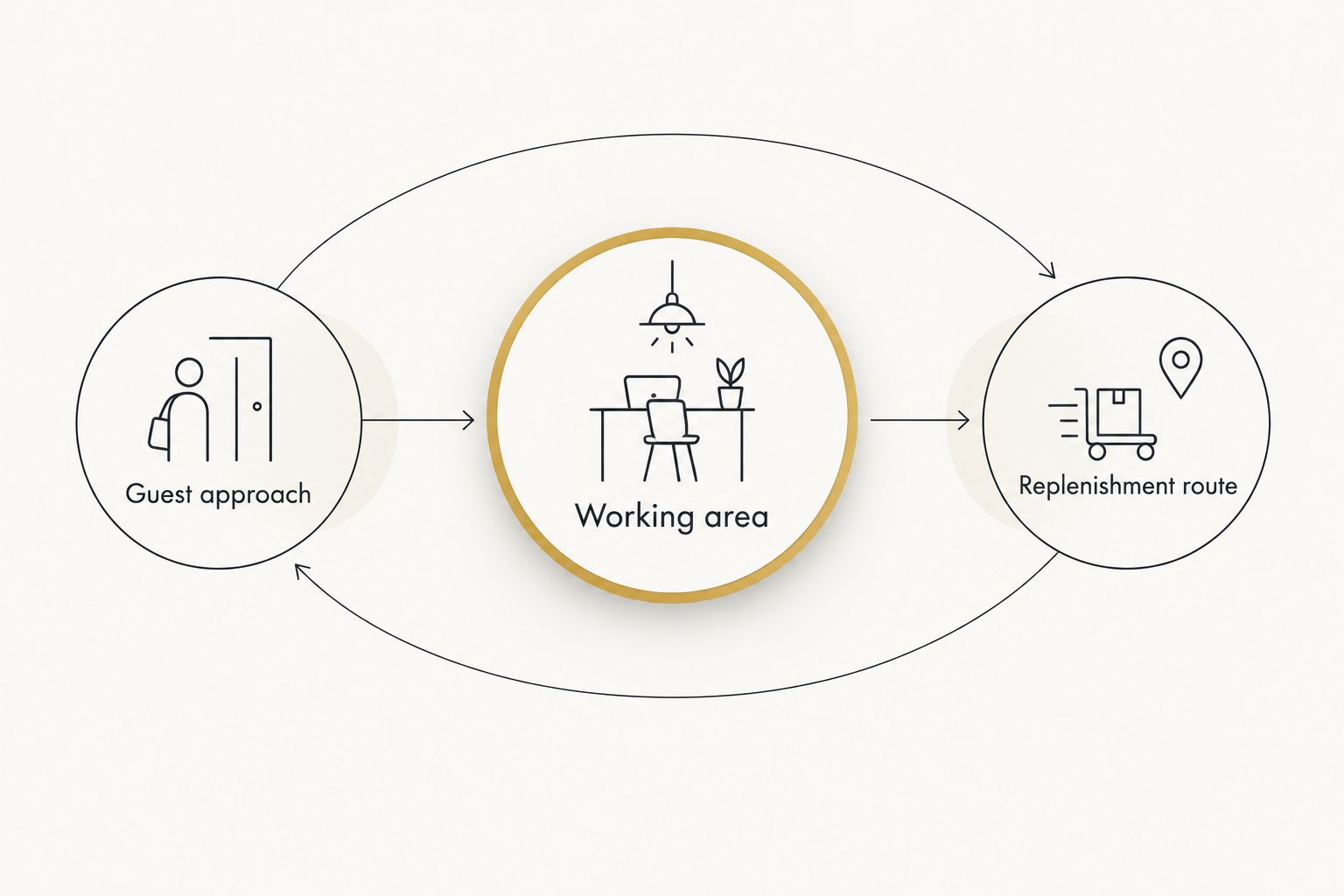
For your 2026 site plan, mark three zones before adding decorative details:
- Guest approach: Where people arrive, wait, order, and leave.
- Working area: Where bartenders prepare drinks and access supplies.
- Replenishment route: How supplies reach the working area without crossing the queue.
Treat these as separate functions even when they share a compact footprint. Walk through the plan from each perspective: a guest carrying a drink, a bartender working, and someone bringing supplies.
Ask the venue where the bar can move if conditions change. Review that alternative with the bartender; shelter elsewhere on the property is not a complete plan unless the setup can function there.
Keep bartending and photo booth planning separate
Custom cocktails and a full-length mirror photo booth serve different parts of a celebration. Give each its own position, guest approach, and quote requirements.
Velvetphotobooth provides both services, so you can ask one team about the two parts of your event. That convenience does not establish a combined package or any particular inclusions.
For bartending, discuss the menu, service period, venue requirements, and responsibilities for supplies. For the full-length mirror photo booth, ask about space, access, operating arrangements, and which optional features are available. Do not infer functions or inclusions from the mirror format.
Keep the two gathering areas from sharing a queue. Guests waiting for photographs should not have to stand in the bar's ordering route.
What to include in your quote request
For a 2026 wedding or private celebration, send the same event brief to each provider you are comparing. Consistent information makes differences in scope easier to identify.
Include:
- Event details: Date, venue address, wedding or private-party format, and expected attendance.
- Service timing: Requested start and finish, plus venue access restrictions.
- Site conditions: Surface, unloading route, steps, gates, and proposed weather protection.
- Preferred configuration: Your first choice and an alternative the venue permits.
- Drink service: Desired menu and questions about who supplies each required item.
- Separate services: Whether you also want a full-length mirror photo booth quote.
Ask the provider to distinguish confirmed inclusions from optional additions and host responsibilities. Request clarification before booking if the proposal leaves equipment, supplies, setup access, or relocation arrangements unclear.
Request your event quote
Share your venue, event date, guest count, and preferred bartending layout.
Which outdoor wedding bar configuration should you choose?
Choose a straight mobile bar unless your venue or service plan calls for something more specific. Move to an L shape for a suitable corner, two service points for separate areas, or a satellite for a distinct drink selection.
Choose a trailer only after access and placement are confirmed. For a 2026 booking, the useful next step is a shared floor plan and a written service scope—not another decorative reference image.
FAQ
What's the best mobile bar layout for an outdoor wedding?
A straight mobile bar is the clearest starting layout because it gives guests one obvious service front. Confirm working space, queue placement, and weather protection before approving it.
Is an L-shaped wedding bar better than a straight bar?
An L-shaped bar is better suited to a usable corner, not automatically better overall. Choose it only when both the guest approach and the working area fit the site.
Should an outdoor wedding have two bars?
Two service points make sense when they serve genuinely separate guest areas. Ask your provider to explain staffing, supplies, and operating times for each point.
What should I check before booking a trailer bar?
Confirm venue permission, the vehicle access route, ground suitability, clearance, and serving-opening orientation. Ask separately about equipment and utilities rather than assuming they are included.
What details affect an outdoor wedding bartending quote?
The event location, service timing, guest count, drink menu, access conditions, and requested equipment define the scope providers need to quote. Ask which responsibilities belong to you, the venue, and the bartender.
Can I request bartending without a photo booth?
Ask Velvetphotobooth for a bartending-only quote and specify that service in your event brief. Photo booth rentals and custom cocktail bartending are separate services; confirm the proposed scope before booking.
What kind of photo booth does Velvetphotobooth rent?
Velvetphotobooth rents a full-length mirror photo booth. Ask about its space requirements and optional inclusions without assuming particular functions from the mirror format.
One last thing
Draw the queue before decorating the bar. A beautiful counter in the wrong place still interrupts your celebration. Trace the path from ordering to collecting a drink, then check that guests can leave without walking back through the line.